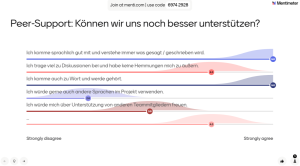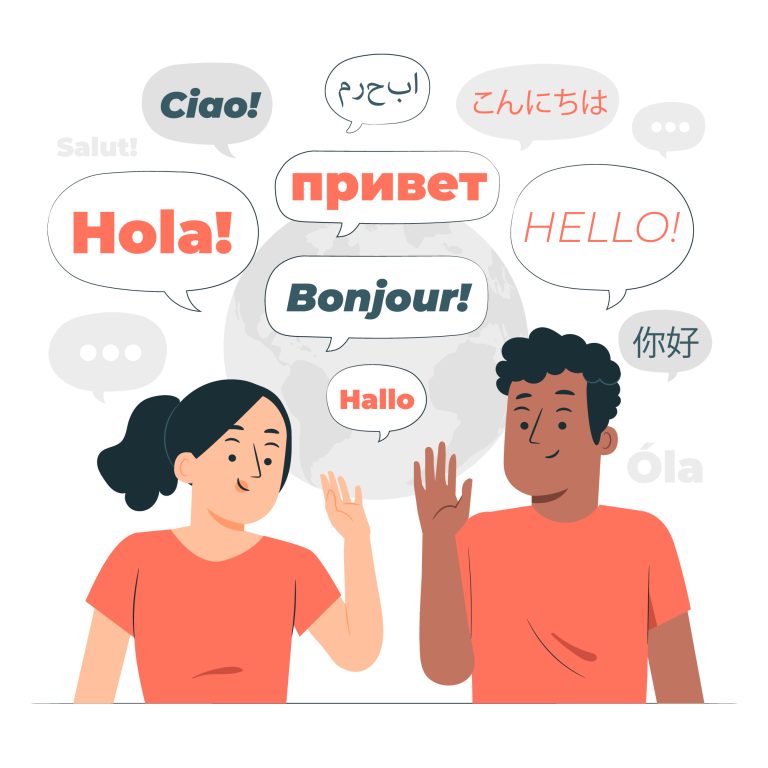
"Many of the Japanese students reported feeling nervous and anxious before the exchange that they were to take part in began, believing the level of their English to be insufficient for the activities proposed."

(Healy / Kennedy 2020: 133)
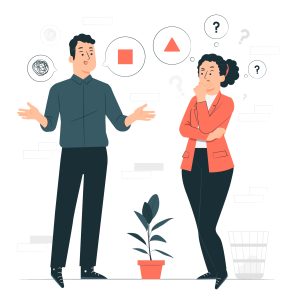
“So there were two or three groups that worked really really well and there was one group that was just sitting there [in class] and didn’t get any replies from their [partner] group which was also sitting in class. And then I couldn’t communicate with [the partner teacher] because she didn’t reply to her emails and she didn’t have any other social media because she didn’t have a smartphone. So I had to tell one of my students to tell her partner to tell [the partner teacher] that one of the groups wasn’t working. So that made it very complicated”
Teacher
(Baroni, Dooly et al. 2019: 76)
"It is strange at first because you can tell that your virtual partners have a different way of doing things and this is unsettling."
Student
(Baroni et al. 2019: 32)
"Some of their utterances were quite provocative, for instance concerning the relationship between the USA and Europe. One of the Spanish side wrote that she did not like the USA. To my mind, if someone has an opinion, he or she should substantiate it."
Student of a US University
(O`Dowd / Ritter 2013: 629)
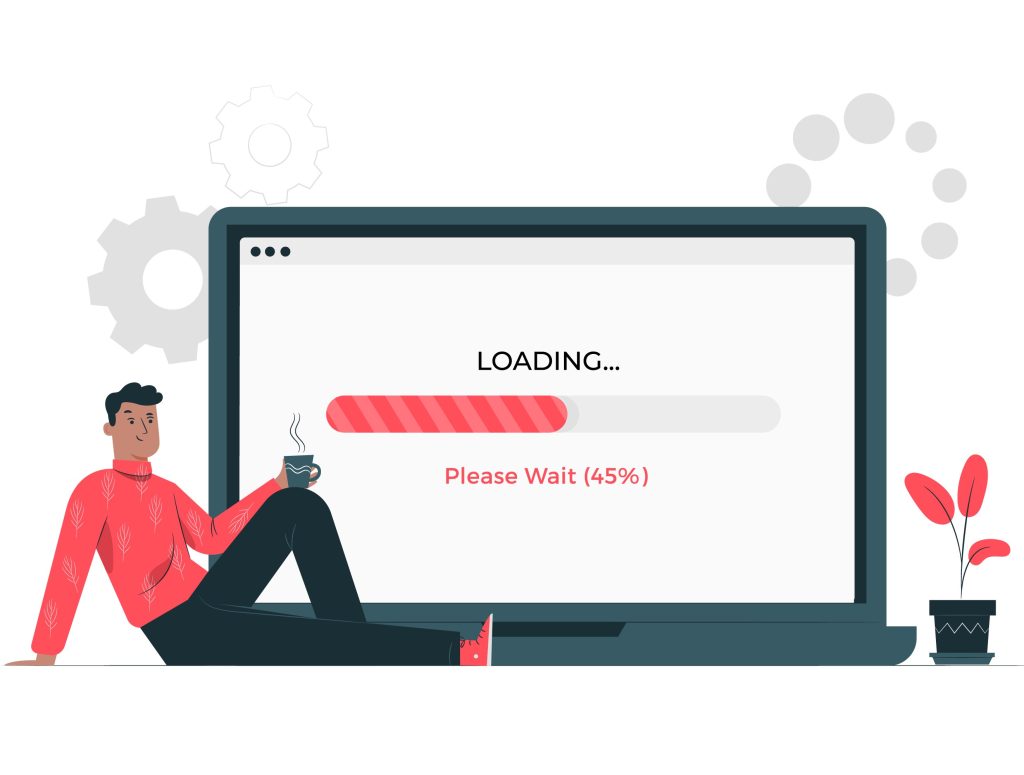
"The google meets would freeze up when we were on [,] our people would keep getting kicked off"
Student
(Calvo / Hartle 2023: 5182)
"It was very interesting to see how we use different platforms for the same situation, for example, we didn’t even know about Canvas, and they didn’t know how to use google slides, which is a tool we always use when preparing presentations. It was really interesting to see this cultural difference"
Student
(Calvo / Hartle 2023: 5183)
"We tried to Skype one time and the connection was so terrible that we could hardly hear anything each other was saying. It was quite – it was embarrassing, you know."
Student of the Open University, UK
(Lewis / Kan 2021: 8)
"For our 30-minute session, it was probably… Well, because I’m not working under pressure, I tend to take a long time to do everything nowadays. Erm, I’d probably spend at least a couple of hours preparing it. And that would be, sort of, looking up sort of useful sentences that I could use, given – given the topic."
Student of the Open University, UK
(Lewis / Kan 2021: 8)
"Usually, the time when our, sort of, timetables overlap tends to be in the morning, erm, which is not a problem for me, usually not a problem – But, for her, that time was just when she was putting the kids to bed and – it’s, it was the busy part of the evening for her. So the scheduling was really difficult."
Student of the Open University, UK
(Lewis / Kan 2021: 8)
"Finally, and perhaps most importantly, setting up and running VEs is extremely time-consuming for all involved. This burden on the teachers involved has until recently been largely unrecognized by institutions with little or no extra preparation time allocated. Many teachers, passionate about the potential benefits of VE, presently spend this time as a labor of love"
(Healy / Kennedy 2020: 136)
"Students complained a lot in the process and said it’s not possible, we can’t do that and we have to be in the same room and no… but in the end, I think they were okay with it and the products were nice"
Teacher
(Baroni et al. 2019: 67)
"The problem with this project . . . was the fact that the groups on the other side [of the Atlantic] had a completely different motivation than we had. . . . Most of the students in our seminar just wanted a so called “Teilnahmeschein” [certificate of participation] which was the reason why none really worked on the paper. . . . The Americans had to do the work in a certain time because it was the end of their semester. . . . 80% of the work on the final paper was done by [the Americans] . . ."
Student of a german university
(Belz / Müller-Hartmann 2003: 77)
(Did you have any kind of workload distribution? In terms of organizing the exchange?)
“[laughing] Well, [laughing] I did all the Moodle things and then I asked her all the time and she always said ‚Yeah yeah that’s fine, that’s fine! So we didn’t really develop this together…”
Teacher
(Baroni et al. 2019: 76)
"So I think more should be done in the level of teacher education [...] Because there are still many language teachers who are not very good at the language or intercultural issues and the question is how to educate these teachers, [and] enhance their intercultural skills [...]."
Teacher
Baroni, Dooly et al. 2019: 82 f.
"When it comes to teacher education, it already says in the curriculum that ICT skills are vital but they should also encourage it more in teacher training… So in [my training institution] for example, there are no courses on technology which they [the student teachers] have to take”
Teacher
Baroni, Dooly et al. 2019: 83

“I tried to get them to bring the press to our faculty years ago to show them how we were doing synchronous communication but they weren’t interested. But now, because there are more of us, they are rehabilitating the language lab so we can do telecollaboration in it. But we need more people. For these things to work, you need lots of people doing it. Until you have more people doing something, you won’t get anywhere. You need union. That’s why I think it’s so important to spread the news in the university, so others will start doing it too”
Teacher
(Baroni, Dooly et al. 2019: 81)
This work © 2025 by VE-Collab is licensed under CC BY-NC-ND 4.0